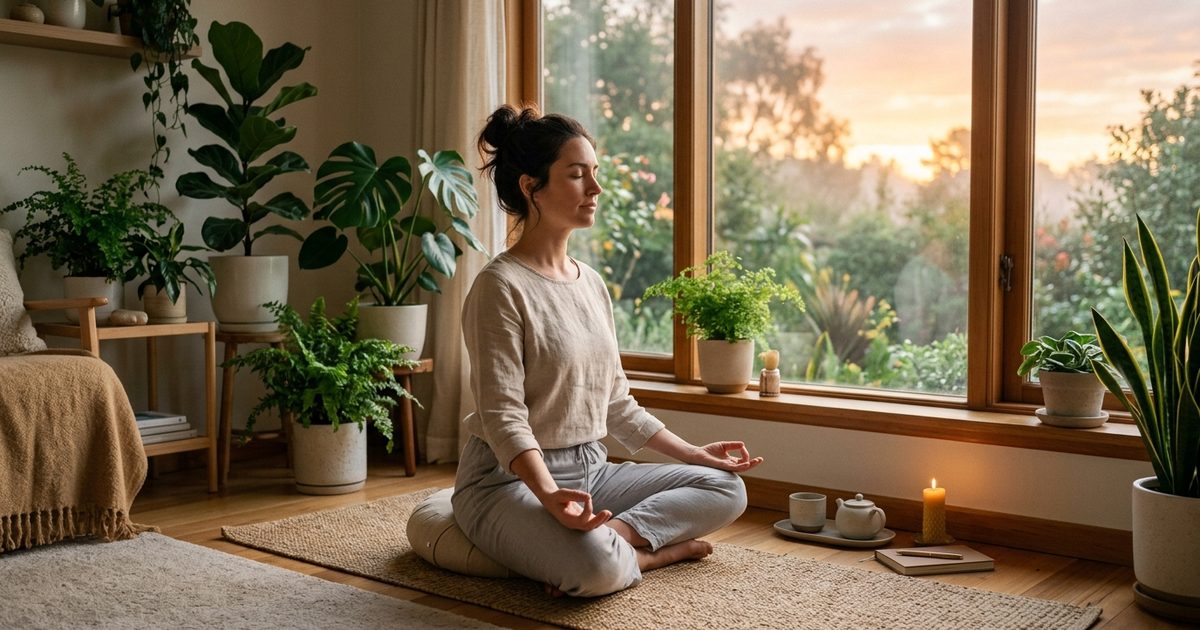
Waking up with a racing mind, a tight chest, or constant worry can make the day feel overwhelming before it even begins. A morning meditation routine — even just 10 minutes — can transform your relationship with anxiety and set a calm, centered tone for the entire day.
Why Morning Meditation Works
Anxiety is often worst in the morning. Cortisol levels naturally peak between 6am and 9am, triggering a "morning anxiety" effect. Meditation counteracts this by activating the parasympathetic nervous system — your body's natural relaxation response.
Studies show that just 8 weeks of daily meditation can reduce anxiety symptoms by up to 58%. It physically changes the brain, shrinking the amygdala (fear center) and strengthening the prefrontal cortex (rational thinking).
The 5-Step Morning Routine
This routine takes 10-15 minutes and can be done in bed or seated comfortably. No special equipment needed — just your breath and a quiet space.
Step 1: Sit comfortably with your spine straight. Close your eyes or soften your gaze. Step 2: Take 3 deep breaths — in through the nose for 4 counts, out through the mouth for 6 counts. Step 3: Let your breath settle into its natural rhythm. Notice the sensation of air entering and leaving your nostrils. Step 4: When your mind wanders (it will), gently bring attention back to your breath without judgment. Step 5: After 10 minutes, open your eyes and take a moment before starting your day.
Breathing Techniques for Anxiety
Different breathing techniques work for different people. Here are the most effective ones for morning anxiety:
| Technique | How To Do It | Best For |
|---|---|---|
| 4-7-8 Breathing | Inhale 4, hold 7, exhale 8 | Acute anxiety, falling asleep |
| Box Breathing | Inhale 4, hold 4, exhale 4, hold 4 | Stress, focus, calm |
| Belly Breathing | Breathe into stomach, not chest | General anxiety, relaxation |
| Alternate Nostril | Close one nostril, breathe alternate | Balance, clarity |
| Counted Breathing | Count each exhale up to 10, restart | Racing thoughts |
| Lion's Breath | Inhale, exhale with mouth open wide | Releasing tension |
Building the Habit
Consistency matters more than duration. Meditating for 5 minutes every day is far more effective than 30 minutes once a week. Here's how to make it stick:
- Same time, same place: Meditate immediately after waking up, in the same spot each day
- Start tiny: Begin with just 3 minutes and gradually increase
- Use an app: Insight Timer, Calm, or Headspace offer free guided sessions
- Don't judge yourself: A "bad" meditation is still a meditation
- Track your streak: Visual progress is motivating
- Be patient: Benefits compound over weeks, not days
Common Mistakes to Avoid
Many beginners give up on meditation because of unrealistic expectations. Here are the most common pitfalls: trying to "empty your mind" (impossible — just observe thoughts), forcing relaxation (let it happen naturally), meditating on a full stomach (uncomfortable), and giving up after a few days (benefits take 2-3 weeks to appear).
Remember: meditation is a practice, not a performance. Some days will feel peaceful, others will feel restless. Both are normal and beneficial.
What to Expect
In the first week, you may feel more aware of your anxiety — this is normal. In weeks 2-3, you'll notice moments of calm between anxious thoughts. By week 4, your overall anxiety baseline will begin to drop. After 8 weeks, the changes become permanent as your brain rewires itself for calm.
- Week 1: Increased awareness of thoughts and anxiety patterns
- Week 2-3: Brief moments of genuine calm and clarity
- Week 4: Reduced overall anxiety, better sleep, improved focus
- Week 8: Permanent neural pathway changes, significantly lower anxiety
Article Was Generated By AI.

Comments (3)
Great article! Very helpful and well-written.
This is exactly what I was looking for. Bookmarking!
Amazing content as always. Keep it up!